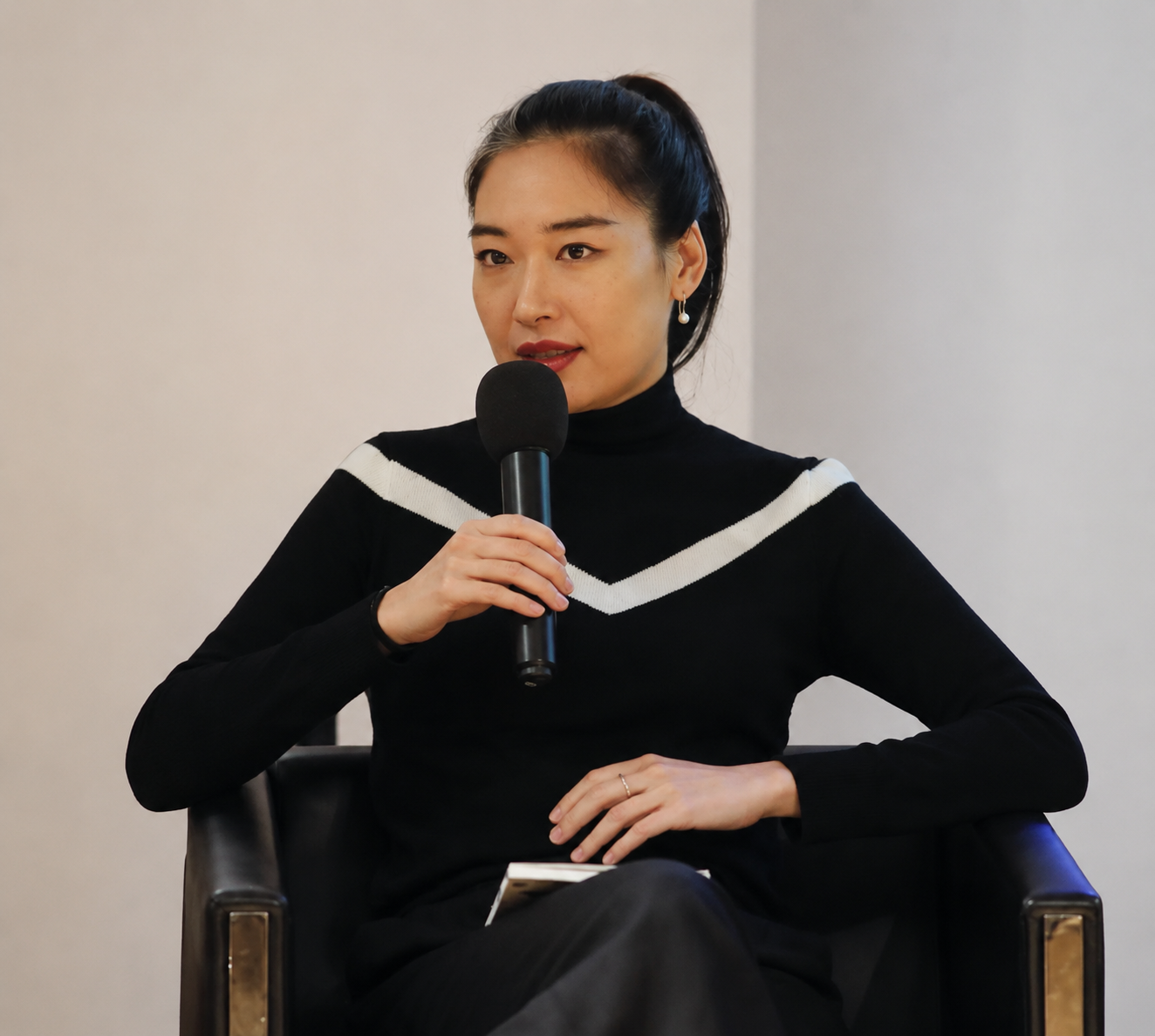
New Value Institute was initiated by Jingyi Wang, an interdisciplinary artist and researcher who has developed her artistic practice since 2014. Born in Beijing, she has long lived and worked between Norway and China. Her practice constructs artistic conditions through which systems of value, judgment, exchange, labour, legitimacy, and self-worth can be enacted and examined.
Her education and professional background in communication, media, advertising, and performing arts shaped her attention to how value is framed, circulated, recognised, and legitimised in public life. Her recent research increasingly engages institutional design, complex systems, artificial intelligence, and the ways computational systems formalise value.
Wang holds a B.A. in Advertising from Peking University, an M.A. in Global Communication from The Chinese University of Hong Kong, and an Erasmus Mundus Master in Performing Arts jointly delivered by Université libre de Bruxelles, the University of Copenhagen, and Université de Nice.
She serves on the editorial board of TURBA: The Journal for Global Practices in Live Arts Curation.
Her projects have received long-term support from Arts Council Norway.
Her works have been presented at Bergen Kunsthall, BIT Teatergarasjen / Meteor Festival, Black Box teater, TPAM Yokohama, Harbourfront Centre Toronto, Hong Kong New Vision Arts Festival at Hong Kong City Hall, Kunsthall 3.14, Studio USF, and Penghao Theatre.
Her work has been featured in Nikkei, Norsk Shakespearetidsskrift, South China Morning Post, and The Mainichi.
Across auctions, trials, interviews, listening environments, living systems, and AI-mediated conditions, she reorganises social forms so that relations of value can become perceptible through public action and encounter.
Wang’s practice provided the initial questions, cases, and methodological foundations from which NVI emerged. As the institute develops, this founding corpus becomes one source within a wider collaborative research environment open to other practices, disciplines, communities, and institutional contexts.